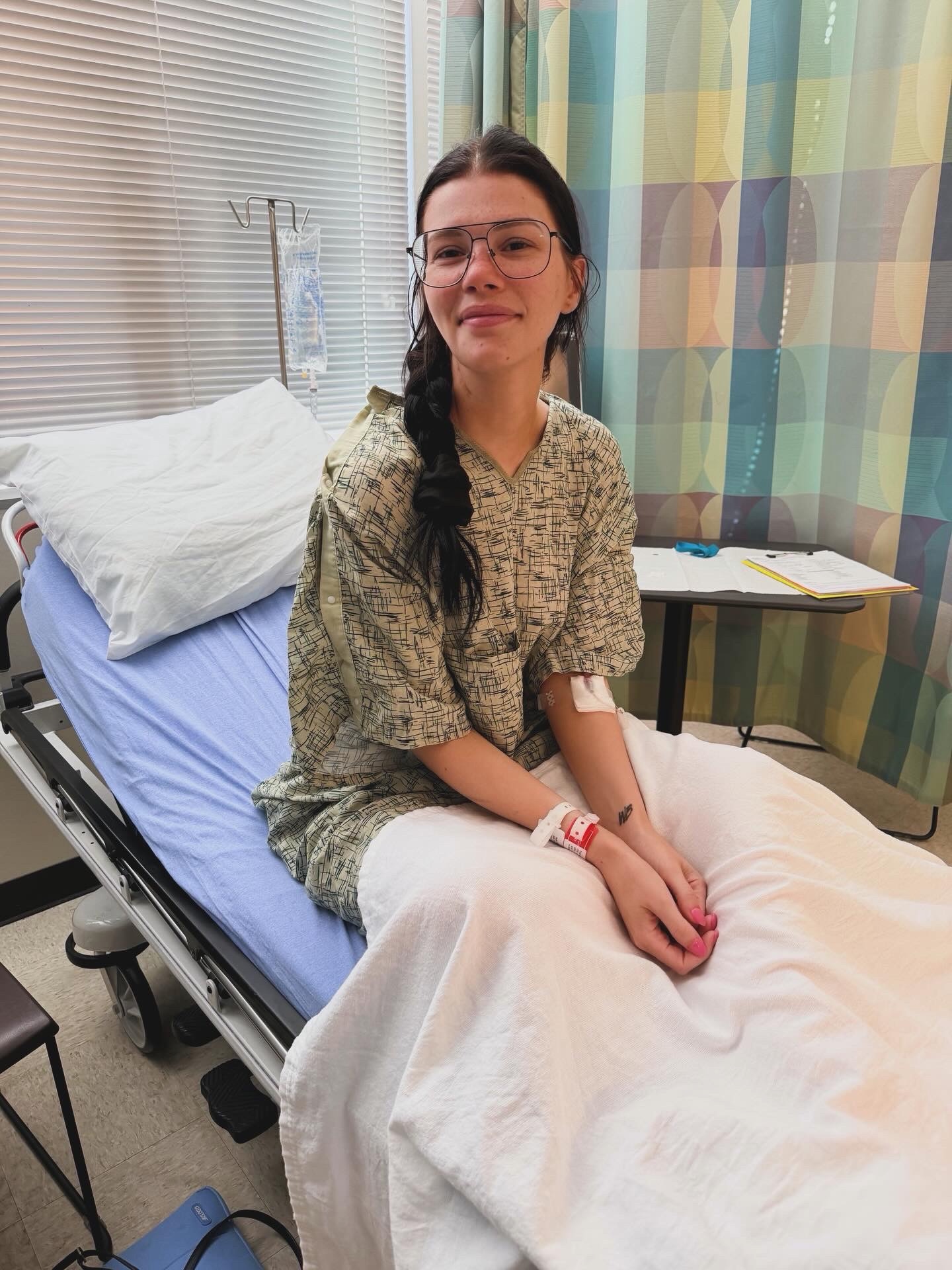
No one grows up hoping to become a professional patient. No one dreams of memorizing medication names (where do they come up with those anyway?), understanding insurance appeals, reading radiology reports before breakfast, or knowing which emergency department or hospital is more likely to take them seriously.
Yet somehow, many people with chronic illnesses become exactly that. I absolutely have. I never dreamed of this being my future and definitely didn’t choose to read medical literature for fun.
When you’re sick for a few days or weeks, you’re a patient. You probably Google it (I see you, hypochondriacs), talk to your doctor, treat it, and hopefully recover quickly.
When you’re sick for more than that, you become your own medical researcher, case manager, advocate, scheduler, historian, nurse, pharmacist, translator, accountant, and often a detective. You learn these “roles” on the go when all you wanted to learn about was what songs or shows were currently trending.
So…
Congratulations!
Whether you asked for it or not, you’ve just enrolled in the world’s longest, most expensive, and least enjoyable degree program.
There is no graduation. There are no office hours. No scholarships. Attendance is mandatory.
If you stay long enough, you’ll become surprisingly good at it. Unfortunately, there are no diplomas, grades, or awards to acknowledge all your hard work.
Let’s get started.
Chapter 1: Learn a New Language
Today you will learn how to speak healthcare.
The only catch? There is no dictionary. Instead, you learn one confusing term, abbreviation, and radiology report at a time until one day you realize it comes natural.
You’ll become fluent in MRI, CTA, CBC, EMG, IVIG, Dysautonomia, stenosis, subluxations, idiopathic, prior authorizations, multidisciplinary, incidental findings, and differential diagnoses.
You will also learn:
- “Normal” doesn’t actually mean nothing is wrong
- “Rare” often means “we don’t know” before it means “there aren’t many of you”
- “Anxiety” is a placeholder for “you are overreacting”
- “Let’s monitor it” is often said by several different doctors and can mean something different to all of them
Before long, you’ll become conversational in an entirely new language. You’ll casually drop into conversation with “they found a mass effect on the left common iliac vein without secondary thrombosis”. You’ll stop asking what “idiopathic” means, start correcting people when they confuse a CT with a CTA, and realize that “within normal limits” isn’t always the comforting phrase everyone thinks it is.
Eventually, you’ll stop needing Google during appointments because you’ve heard the terminology hundreds of times before!
Chapter 2: Become a Medical Historian
No one knows your story better than you.
You’ll remember surgery dates better than birthdays, and not just a couple. I can recite 20+ dates of diagnoses, surgeries, and some of the most random dates in my journey. If I could delete that memory stick in my head, I would be able to recite every song lyric in the history of man.
You’ll know which medication caused side effects three years ago. And not just one specific one. Do you know how many medications can be used for one symptom? If that one didn’t work, you continue down the list. Don’t forget off-label, either. If you read my medication list, you’d be surprised how many of them are not directly used for their FDA-approved purpose. That’s a lot of side effects.
You’ll remember that one doctor from 1999, that one hospital stay in 2008, or that one scan in 2025 because someone finally noticed a tiny detail that changed everything. Or maybe they told you to stop faking it, both have happened.
You’ll become the keeper of timelines, symptom journals, imaging discs, operative reports, and lab results. You can’t forget it even if you wanted to because every new specialist starts with the same question:
“So… tell me what’s been going on.”
Chapter 3: Master the Follow-Up Question
Early on, everyone is taught to wait for answers because doctors will have them. You’re sick, they’re educated. You’d think that is how this should work every time.
Your job is to make sure you leave the appointment with a direction. Instead of asking, “what did you find?”, or being silent while the doctor shares their thoughts, we need to be more focused on:
- “What are we trying to rule out?”
- “If this isn’t the cause, what else is on your list?”
- “What made you choose this test?”
- “How confident are you in this diagnosis?”
- “If the results come back normal, what’s our next step?”
- “What would change your initial impression of what is going on?”
- “Is there a specialist who sees this more often?”
- “If this were your family member, what would you recommend?”
- “Why do you think that?”
We don’t let doctors or medical professionals dismiss us if we are not satisfied with the outcome. If they don’t know what is next or where healing begins, have them point to someone else who might.
It’s important to know that you aren’t challenging them or their expertise, but rather, you genuinely want to understand their reasoning. Sometimes, their answer is reassuring. Other times, it uncovers assumptions that might deserve another look.
“No” isn’t always the end of the conversation. It can lead you to a new, better conversation that gives you more information.
“Can you help me understand what led you to this diagnosis/this outcome?”
That one sentence has probably taught me more than any Google search ever could.
You will also become strangely comfortable saying things like,
- “You’re wrong.”
- “Is there another specialist who understands this more?”
- “I understand the test was normal, but how does that explain what I’m experiencing?”
- “Can you document in my chart that I requested this test and that it was declined?”
- “Can we talk about how poor my quality of life is and how we can improve it?”
You might worry about sounding difficult, questioning someone’s expertise, or being labeled “that patient who asks too many questions”.
Here’s what I’ve learned:
Speaking up for yourself isn’t a sign that you don’t trust your doctor. It’s a sign that you’re invested in finding the right answer and you’re an active participant in doing so.
The best doctors don’t fear questions. They welcome them, and if asking honest, informed questions changes the dynamic of the appointment, that’s information too. Good clinicians are partners in care. Interview them.
Chapter 4: Find the Right People, Build a Team
This is one of the more underrated lessons: not every doctor is your doctor.
Here, you will learn that a medical degree doesn’t automatically make someone the right fit for your situation.
Some doctors have incredible knowledge but struggle to listen. Some listen beautifully but aren’t familiar with your symptoms or diagnoses.
Some are honest enough to say,
“This is outside my expertise, but I have someone I’d like you to see.”
Oddly enough, those are often the ones you trust the most! The right doctor won’t always have the right answer, but they’ll keep looking with you.
Medicine, especially chronic illness, is not one specialty. Specialists are extremely important as health concerns become more and more complicated. So, you’ll learn to build a healthcare team, not collect specialists.
A team needs to communicate, respect others, and work toward the same goal.
The best care isn’t from one, but from many. A cardiologist who listens to your neurologist. A gastroenterologist who reads your vascular surgeon’s notes. A primary care physician who sees the whole picture. In the middle of that is a patient who’s treated like a member of the team. The best outcomes happen when everyone knows their role, listens to the patient, and talks to each other.
By now, you’ve probably realized that becoming good at being sick has very little to do with illness itself. It’s about learning a language unwillingly, asking questions about yourself to strangers, hoping to be heard, and building a all-star team one appointment at a time. These aren’t talents or skills you add to a resume, they’re lessons learned through trial and error, countless waiting rooms, and more than a few difficult conversations about the most important person in your life (you).
Unfortunately, this is only the beginning of the curriculum. Once you’ve learned how to navigate the healthcare system, a whole new set of lessons begins!
You’ll learn how to become the CEO of your health, how to participate in advocacy, and even dabble in pattern spotting.
I can’t forget the hardest lesson of all, though.
You’ll discover that finding answers isn’t the finish line. Learning how to live, adapt, and keep moving forward while the questions continue is tough to do.
We’ll get to those in Part 2.
Comments
One response to “How to Become Really Good at Being Sick: Part 1”
Excellent read! You are very gifted at sharing your experiences and insight. You need to find a publisher!! I am confident that your story will help others. As health care professional, I find listening to the view of the patient so interesting and educational. Patients know themselves best! We need to listen.