I want to talk about something that’s been circulating lately, especially on social media by people who are not educated on or living with CRPS, and why speaking in absolutes about medical care is dangerous. I am not normally one to speak up about anything, but advocating for myself and my community is consequential. This is a personal, lived-experience, not just for me, but for many others.
There’s a narrative going around that spinal cord stimulators are a ‘scam’ and that people should never agree to them. I have read many peer-reviewed articles on spine stimulators and the dangers behind them. I have also read articles that spoke about the benefits of them.
And before I go any further, I want to be very clear. I am not erasing or denying anyone else’s experience with spine stimulators. It doesn’t mean everyone has good outcomes. Some people don’t. Some people have complications and those stories matter too.
Anyone with CRPS knows this disease is not black and white. You don’t get diagnosed, given one treatment, and suddenly you’re cured. It’s complex. It’s brutal. And it’s incredibly hard to treat.
Calling medical devices a ‘scam’ or telling people to never consider them is not advocacy…it’s fear-based misinformation. It tells patients who are barely hanging on that their potentially last option isn’t valid. It tells survivors like me that our lived experience doesn’t count or our success story isn’t valuable. Statements like that erase people like me. It erases progress.
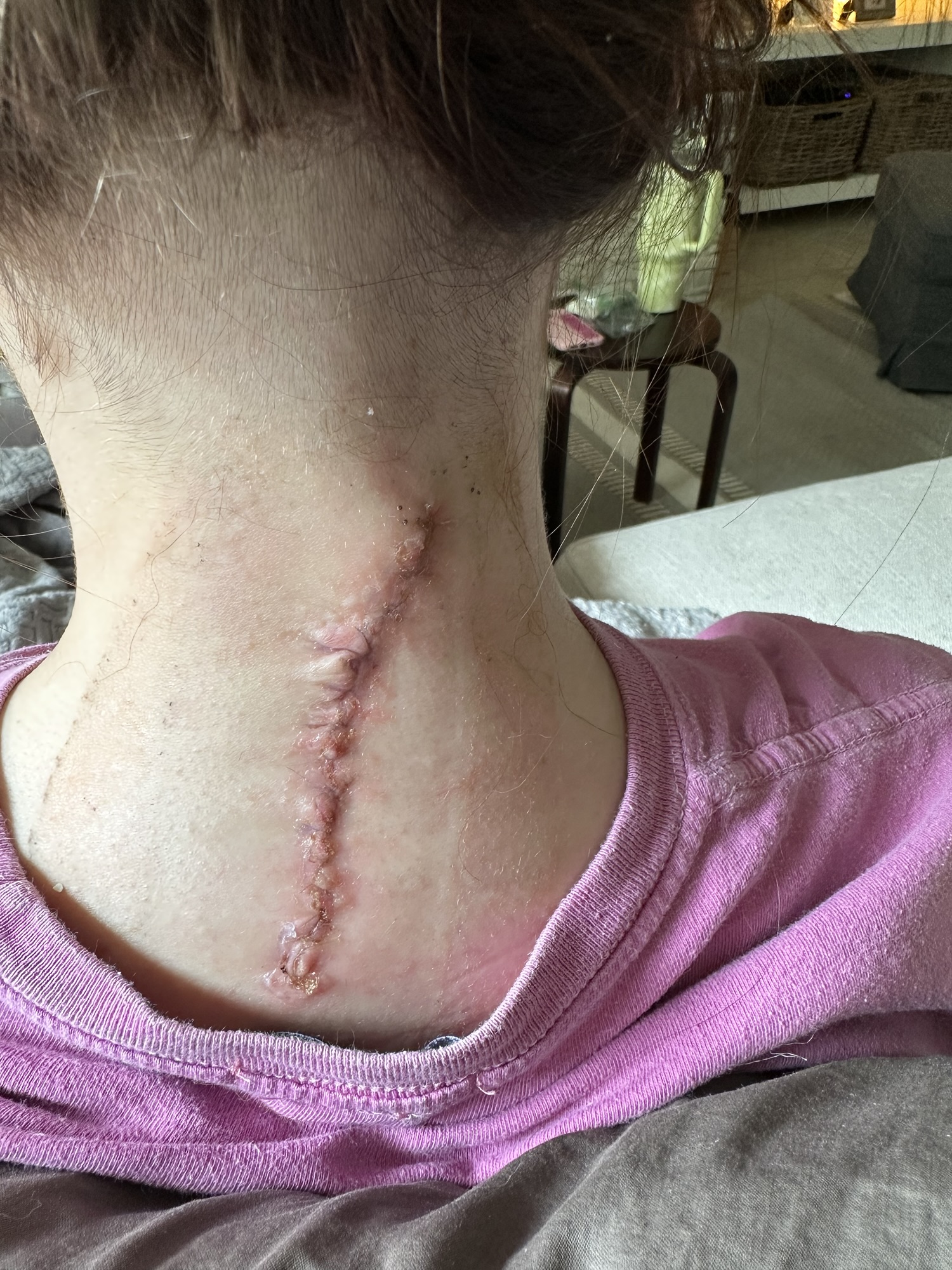
I am alive today because of my spinal cord stimulators. Not metaphorically. Literally.
Since I was 8, I tried everything for my CRPS. Medications, procedures, therapies. My pain wasn’t just pain, it was consuming my ability and my will to function, to think, to live. I was a child losing her childhood. My stimulators didn’t magically cure me and they didn’t come without risk, but it gave me back enough control over my body to survive and eventually to live again.
I spent 2 years researching spine stimulators before I got my first one at 19. I had the most amazing, highly-specialized, successful, endearing, educated, caring, ethical, supportive, intelligent, and reasonable surgeon. The only way I would ever consider getting a stimulator is if I weighed all options, all benefits and risks, and I had the best surgeon who ONLY would operate after the most intense medical and psychological testing was complete and I was a great “candidate”. Even then, he told me over and over again it might not work and might be another dead end. I was given all the information without any influence or pressure and I made the right decision for me. Twice, actually.
What’s missing from a lot of these viral takes we see online is that spinal cord stimulators are not one-size-fits-all treatments. In the same way CRPS is not one-size-fits-all. Spine stimulators are included as a treatment option by board-certified pain specialists and neurosurgeons after conservative treatments fail. They require intense psychological screening. They involve trial periods to help determine if they could be an option for you. They are backed by decades of peer-reviewed research for specific conditions and there is evidence all over the world of successful experiences in many different kinds of people.
That said, we also have to acknowledge something important in this debate. There are bad doctors. Greedy doctors. Untrained doctors. Providers who don’t listen. Please trust your gut and please know there are still ethical, compassionate physicians who truly care. Get as many opinions you can to make the right decision for you.
The purpose of this video isn’t to confuse or to convince people into getting a stimulator. I would never try to influence someone’s medical decisions.
But if you’re considering an implant, or ANY OTHER TREATMENT for ANY OTHER ILLNESS, here’s what does matter:
• get multiple medical opinions
• Find providers who explain risks honestly and don’t operate on every single patient that comes through. Surgeons are trained for surgery but there are ones that care and genuinely want to help you.
• Use evidence-based decision-making. Consult with your loved ones and people you trust.
• Listen to both success stories and cautionary ones without letting fear make the decision for you. Everyone will have an opinion despite having the answers.
You deserve information. Not absolutes. Not fear. This is a small, unique community and the best thing for us to do is support each other. Everyone deserves their chance at a life with less pain..I know it’s possible because I am l living it.
Thanks for reading.
***Medical decisions should always be made with qualified providers, multiple opinions, and evidence-based care.