The last year and a half has been a period of reevaluation. We have revisited assumptions that had once felt settled and acknowledged that what worked before was no longer enough. Treatment adjustments weren’t about starting over, but about responding to a body that was changing and had since become “unresponsive” to the medication I was taking. That process required a ton of patience, trial and error, and a renewed level of advocacy: something I’ve had to learn again and again.
I was also getting really scared. The chest pain was severe, infiltrating every single moment of my day, and my heart rate was back to extremely high levels. I was scared to get out of bed or stand up from my desk and pass out. The pain and intensity felt like I was having a heart attack on a daily basis.
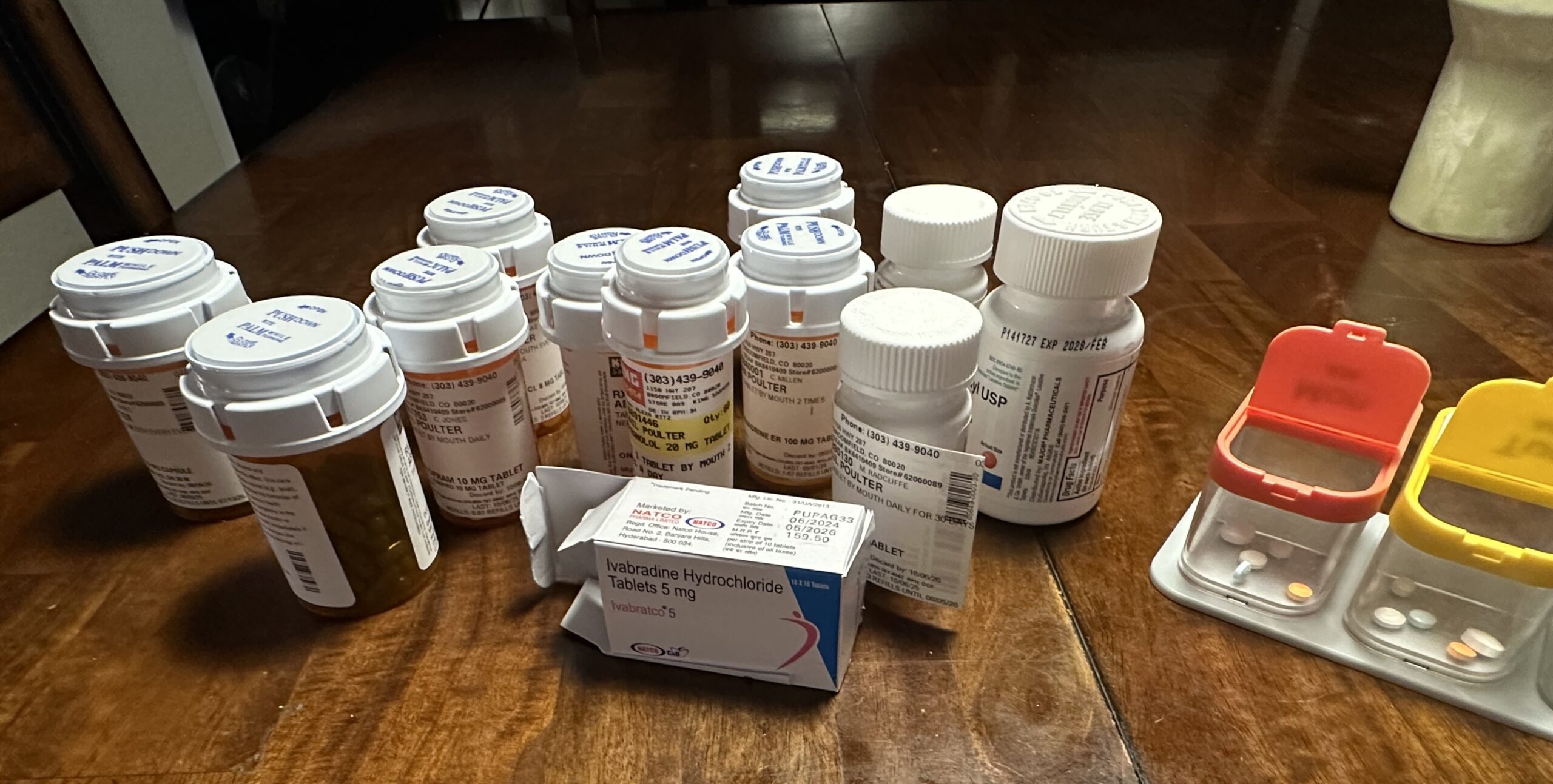
After about 9 months, we finally found a combination of medications that worked better for me. My heart rate became more controlled, chest pain less severe, and dizzy spells less frequent. That progress came with its own trade-offs, though. The same medications that helped my heart also caused my blood pressure to drop significantly, meaning I now have to monitor it very closely.
Another challenge has been access. One of the medications that has helped me most isn’t approved specifically for POTS, but rather for heart failure. Since it is used off label in my case, insurance coverage isn’t an option, and I’ve had to rely on a Canadian pharmacy to continue treatment. Another downfall of chronic illness.
This phase of my POTS journey was less about finding new answers and more about accepting that chronic illness doesn’t move in a straight line. Stability can shift without warning and progress doesn’t always mean improvement. Learning to live in that space, without blaming myself for needing more support or different care, became just as important as the medical changes themselves.
Today, I feel better. With the current combination of medications and the addition of at-home IV therapy, electrolytes, and infusions this year, I’ve been able to feel more consistently close to normal. These treatments have helped support hydration, circulation, and symptom management in ways oral medications alone couldn’t. While they haven’t eliminated every symptom, they’ve contributed to a steadier baseline and a level of predictability I hadn’t experienced in a long time.
As I’ve mentioned in a previous post, I was also diagnosed with May-Thurner Syndrome, a vascular condition in which the iliac vein is compressed in my pelvis, limiting normal blood flow from the lower body back to the heart. Additionally, I was found to have a jugular vein compression as well, causing more blood flow issues to the brain. Both conditions affect circulation, and together, along with POTS, help explain why my body has struggled to efficiently move blood through my system and to my brain. My heart and my circulatory system have been overworking for years and my symptoms will continue to worsen if not addressed.
Once both surgical interventions are complete, the expectation is that circulation will improve, allowing my medications to work more effectively and reducing the overall symptom burden on my heart. While nothing is guaranteed, restoring blood flow offers a hopeful path forward and for the first time in a while, that hope feels grounded.
While new diagnoses and information can feel overwhelming, this clarity is ultimately a good thing. Each answer brings more understanding and a clearer path forward. It gives me hope, and for the first time in a while, I feel cautiously excited about how much better I may feel as these issues are addressed.
Thanks for reading.