
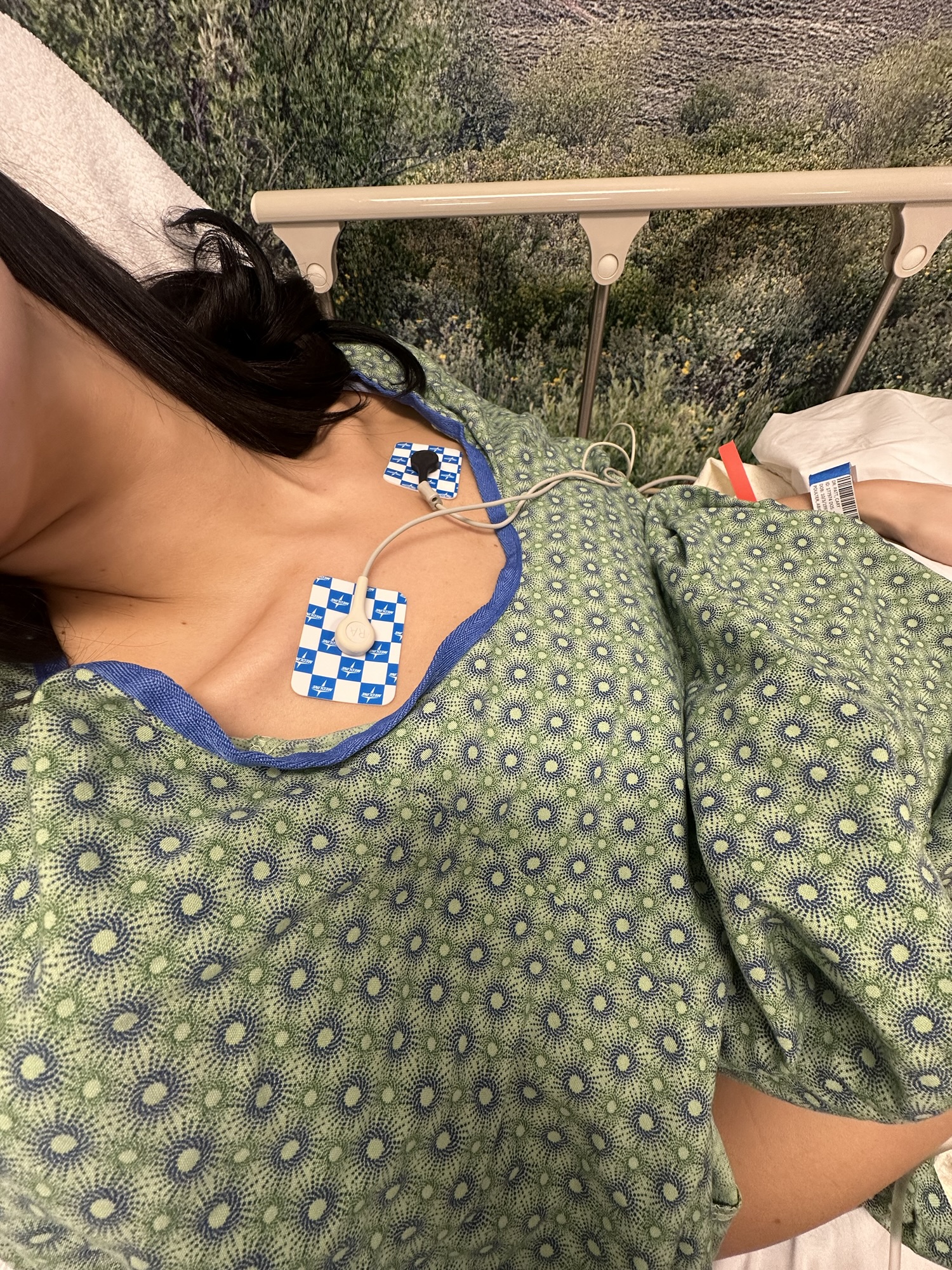
It’s a little fuzzy when I first started noticing that something else was off, largely because the changes were slow and gradual. Looking back, it was likely not long after my Gastroparesis diagnosis. I remember being in my early twenties and feeling confused by symptoms I couldn’t quite place. By 2014–2015, it became clear that something had shifted again, and I was eventually diagnosed with Postural Orthostatic Tachycardia Syndrome (POTS).
In hindsight, the diagnosis was significantly delayed. I can now recognize symptoms that were present as early as college, but at the time they were easy to attribute to existing health issues, stress, or what I assumed was simply part of the college lifestyle. The possibility of another underlying condition wasn’t something I considered, especially when I hadn’t linked my other issues. I didn’t realize then that a new diagnosis was emerging, one that would once again reshape how I understood my health and daily life.
At the time, the symptoms felt easy to dismiss, subtle enough to explain away, and inconsistent enough to ignore. The most noticeable issue was dizziness, especially during physical activity. I vividly remember thinking to myself that I was so out of shape but didn’t know how or why. Workouts became harder, fun activities felt draining, and eventually, everyday tasks like walking up stairs, carrying groceries, doing things that shouldn’t have felt challenging, left me short of breath and unusually fatigued. What stood out most wasn’t a single symptom, but the growing sense that my whole body wasn’t responding the way it used to.
POTS is an interesting condition. Patients are often referred to a cardiologist, diagnosed by a cardiologist, and treated by a cardiologist. Yet despite how cardiac the symptoms appear, POTS itself is not a heart disease. It is a form of dysautonomia, meaning it affects the autonomic nervous system rather than the heart itself. While the symptoms often look cardiac-related, the underlying issue is how the body regulates heart rate and circulation. In POTS, there is a lower effective amount of blood circulating, with excessive pooling of blood below the level of the heart when upright. To compensate, the heart speeds up in an attempt to maintain blood flow, leading to many of the symptoms people experience.
The symptoms can be broad and nonspecific: elevated heart rate, dizziness or lightheadedness, fainting, fatigue, brain fog, circulation issues, tremors, nausea, and palpitations. Since these symptoms overlap with many other conditions, POTS is frequently misunderstood or misdiagnosed.
Getting a POTS diagnosis can be challenging. There isn’t a single test that definitively identifies it, and many of the standard cardiac evaluations like EKGs, ultrasounds, and routine blood work, often come back normal. That can make the process feel frustrating and drawn out, especially when symptoms are persistent.
A diagnosis relies on a combination of factors: a detailed medical history, a physical examination, and a tilt table test. During a tilt table test, the patient is secured to a table that moves from a lying position to upright while heart rate and blood pressure are closely monitored. In simple terms, POTS is identified when the heart rate rises significantly after standing, without the blood pressure dropping in a way that would explain the symptoms. It’s a process that relies more on patterns and responses than on a single lab result. For example, my resting heart rate would be around 80 bpm, and when I sat or stood up, I was reaching 130 bpm or more instantly.
Over time, I became increasingly inactive, not from lack of motivation, but from fear. Fear of triggering symptoms, fear of worsening them, and fear of pushing my body past a limit I couldn’t clearly define. This pattern is common in POTS, and physical deconditioning becomes a significant part of the challenge.
Living in Colorado, a state defined by fitness, movement, and outdoor activity, added another layer. POTS became a quiet source of fear, embarrassment, and constant calculation. I often found myself thinking ahead:
Will there be a lot of walking?
Is the incline manageable?
What happens if I get dizzy somewhere unfamiliar or around people who don’t know what’s going on?
Are people going to think I’m lazy if I don’t workout?
People are going to think I’m weak and pathetic. They’re definitely going to judge me.
That mental load alone can be debilitating.
For me, treatment included starting a beta blocker, which helped significantly control my heart rate without frequent adjustments. I also needed to increase my water and salt intake, as hydration and sodium assist in blood volume and circulation. For several years, my heart rate, dizziness, and palpitations became more stable. Activity was still difficult, but the intensity of symptoms improved enough to allow some sense of balance.
As I got older, became more familiar with my body, and felt like things had plateaued for a time, the pattern began to shift once again. Symptoms that had once felt manageable became more intense. I experienced episodes of severe chest pain, periods of rapid heart rate even at rest, and moments where symptoms interrupted sleep. Fainting episodes became more likely, and it became clear that the condition was no longer as stable as it once had been.
At that point, my doctor and I recognized that it was progressing, and it was time to reassess and adjust my treatment approach. If you haven’t noticed a trend yet, my diagnoses and treatment options were never as simple as we had hoped them to be.
Thanks for reading.