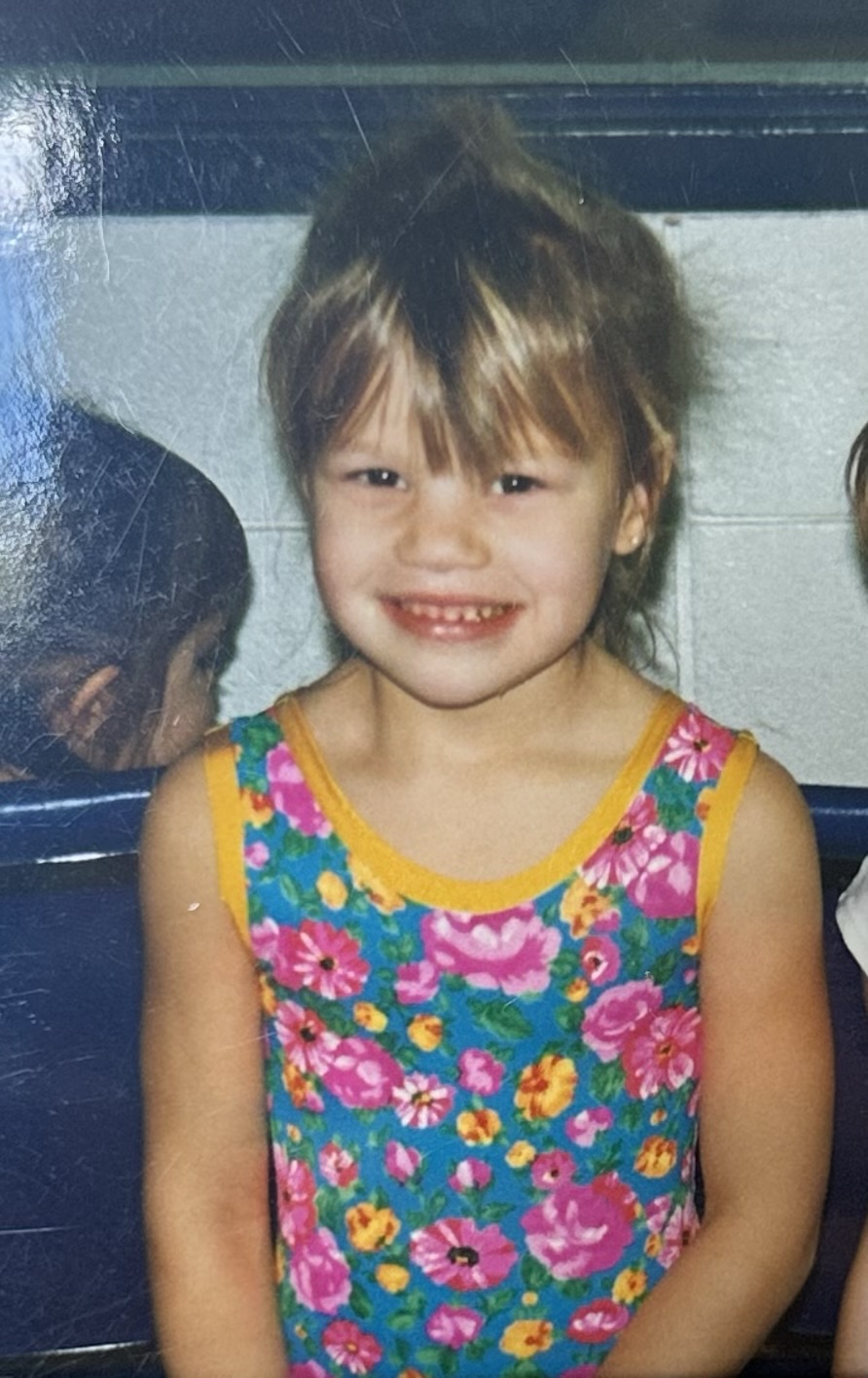
I became a competitive gymnast at a young age, and I absolutely loved everything about it, especially the floor and bars. Beam, on the other hand, always made me a little anxious. It felt so frightening and unforgiving compared to the other events and it was more of a mental fight than anything. One afternoon, following a dismount from the beam, I rolled my left ankle. At first, it seemed like a simple sprain that would heal in a few weeks. Instead, the pain progressed every single day, even though the physical injury healed. It was burning, like my foot was on fire from the inside out and I had extreme sensitivity to temperature and touch. The pain did not fit the injury and any kind of movement, brush of fabric, or slightest pressure was unbearable. Abnormal swelling of the foot and redness of the skin were nothing we had seen before, and I couldn’t use blankets or even wear socks or shoes. Walking was impossible and I was unable to put any pressure on my foot. I used crutches for at least 6 months, jumping from doctor to doctor trying to figure out why I was in so much pain. What was supposed to fade in a matter of weeks only grew worse, and my family and I were very confused and very scared.
One of the hardest parts of this was not being believed by doctors, friends, and other peers. Kids in my class mocked my crutches, even taking them from me at recess to go play in the snow. Multiple doctors told my family that I was faking, exaggerating, or looking for attention. Others assumed it had to be something simple, and that putting me in a hard cast or a walking boot (several types, actually) would somehow fix it. I went through x-rays, MRIs, bone scans, test after test, but every exam would come back normal. The scans said nothing was wrong, yet my body screamed otherwise. Finally, after a very long and terrifying process, we found a specialist at Children’s Hospital. Within 10 to 15 minutes of meeting with me and my family, he mentioned a condition we had never heard of: Reflex Sympathetic Dystrophy (RSD). He explained that I had all the classic markers, though he admitted he had never seen someone as young as me with this diagnosis. Before I continue, I wanted to touch on why the condition has changed terms. It has always been interesting to see how even the name of this condition has changed over time.
When I was diagnosed in 1999, it was called Reflex Sympathetic Dystrophy (RSD). That name reflected what doctors originally thought was happening: an abnormal response of the sympathetic nervous system after an injury. As research has grown, they realized it was incredibly complex and most likely involves much more than that. While they overlap in many ways, there are two types. Complex Regional Pain Syndrome Type I (CRPS-I) and Complex Regional Pain Syndrome Type II (CRPS-II). Type I, which I was diagnosed with, is a pain condition that is triggered by an injury, impacting the sympathetic nervous system, but develops from an unknown source. RSD/CRPS is a diagnosis of exclusion, as doctors must rule out other causes first. Often, CRPS is misdiagnosed as Multiple Sclerosis, Fibromyalgia, or many other types of neuropathies because they are all chronic pain conditions with some similar attributes. The mechanisms behind CRPS are still being studied today, and the shift in name reflects evolving understanding and awareness of how complex and widespread these pain syndromes are. CRPS Type II (CRPS-II) is characterized by an injury that causes direct nerve damage. Before becoming CRPS Type II, it was known as Causalgia, which is the term used to describe the burning nerve pain soldiers had following injuries in the war. Symptoms are often similar between Type I and Type II; however, the underlying causes are different. There are currently no cures and no guaranteed success, with each sufferer grasping at straws on what will and won’t help. The hope is remission, but it is never promised.
Following my diagnosis, my doctors needed me to know something incredibly important: the longer it goes undiagnosed and untreated, the harder it is to treat, manage, and stop from spreading to other parts of your body. Treatment often needs to start immediately, and some methods seemed unusual. My doctor asked, “ready for a pain holiday?”,which would be my first treatment for CRPS. A ‘pain holiday’ was the process of being admitted to the hospital for 7 days, during which a total nerve block (like an epidural) would be placed and left in. For that entire week, I was numb from the waist down, requiring assistance in every move I made. The hope was that this would “reset” my sympathetic nervous system, essentially giving it a chance to quiet down and stop sending the pain signals to my foot.
During those 7 days in the hospital, I saw just about every specialist imaginable; neurologists, orthopedics, psychiatrists, psychologists, physical therapists, occupational therapists…Even while I was numb from the nerve block, they wanted me to function like a “normal” kid as much as possible. I remember thinking to myself, “what is normal anymore? This is my new normal”.Physical therapy became the focus with desensitization exercises, temperature management, strengthening, and even practicing how to walk again, all to retrain my brain to process pain differently.
What stands out most from that time though, is that I wasn’t completely alone. There were 2 other kids on the same floor as me with CRPS, something so rare that even seeing one another person felt unbelievable. There was Will, a boy around my age from Wyoming who had developed CRPS after a farming accident. We spent many of the days visiting each other and reteaching our bodies how to work. There was also another teenage girl whose case still creeps into my mind, so severe it gives me goosebumps. She wore sunglasses the entire time, unable to even tolerate lights, and no one was allowed to touch or talk to her without confirmation. Her mom insisted on warning anyone before entering the room, because even the slight shift in air from the door opening would send her pain skyrocketing. Still to this day I often think about them and wonder where they are. I truly hope they found peace in their diagnosis and are in remission living full, fun, and inspirational lives.
We were children, in the hospital, facing something doctors barely understood and was considered nearly unheard of in kids. I remember that week as one of the hardest times for me to feel that I was going to come out the other side, and I often struggled to find reconciliation with the existence I had. Even then, though, I never really showed much emotion. I don’t remember crying much and all the appointments I had with psychologists and psychiatrists are somewhat of a blur. Everyone always told me how brave I was, and no one truly ever knew how deep I was struggling. Fortunately, I left that first pain holiday with much lower pain levels and the ability to walk again. It felt like a miracle after months of doctor visits, medications, therapies, and treatments. For something somewhat experimental, unreliable and not guaranteed, it was a blessing that it worked for me on the first attempt. Walking out of the hospital felt like getting a piece of my childhood back, even if only for a little while. I truly wish this was the end of story, that I could share how amazing my medical team was and that I have be in remission since the age of 9. However, that is rarely how CRPS lets you go and soon after this, I was back in that hospital with those same high pain levels, same sensitivities, and losing my chance to be a kid once again.
Thanks for reading.