We all bring something into relationships. Old heartbreaks, family patterns, and unspoken fears. Expectations or trauma we didn’t realize we were carrying.
I, like everyone, have wants and doubts in relationships, but most have evolved from my health (or lack thereof). My body, my mind, and my soul are all very different than the average person trying to form new and long-lasting relationships.
When I first got sick, I assumed the hardest part would be the symptoms, the pain, the appointments, the lifetime of medications, the unpredictability…
Turns out, the hardest part is explaining it.
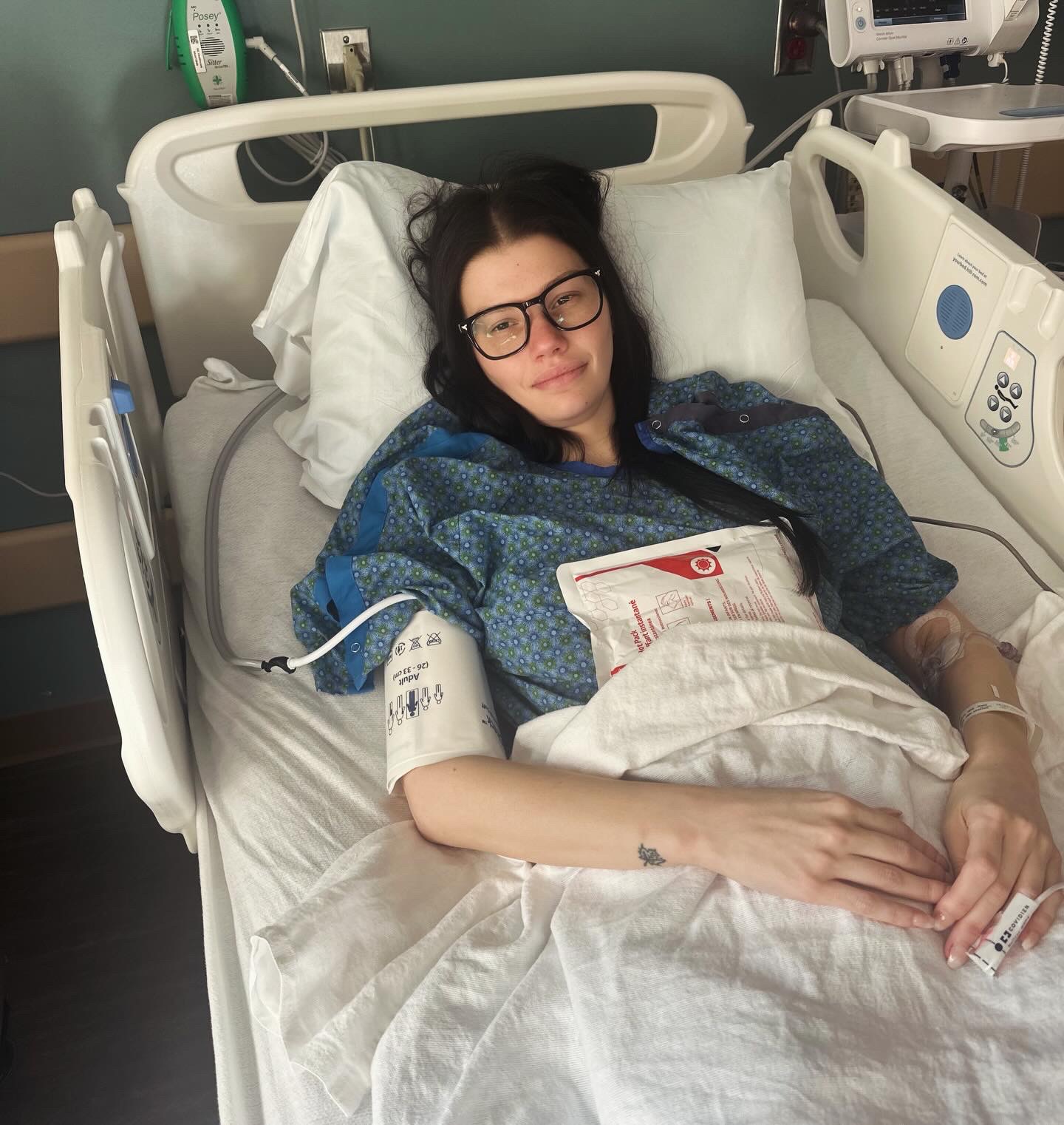
As I’ve mentioned before, most of the people in my life from diagnosis until recently didn’t really know I was ill or, at least, didn’t understand the extent of it. I played sports, did well in school, dated, partied, traveled, ate junk food, and more. I pretended I was living my best life and suppressed everything I could before I would collapse and break in private. I am really good at pretending I’m functional and normal.
There is research on this; on what psychologists call “concealable stigmatized identities.” When something life-altering isn’t visible, people often overcompensate to protect themselves from judgment. Studies show that individuals with invisible illnesses frequently push beyond their limits in social settings to maintain belonging. The cost of that performance, though, is exhaustion and isolation.
I didn’t want to be the sick girl. So I wasn’t.
Like anything that’s exhausting, you hit a breaking point. Eventually, you realize that hiding your reality creates a different kind of loneliness; one where you are surrounded by people who love a version of you that isn’t sustainable, and when those cracks begin to show, they don’t get it.
They don’t understand why your energy suddenly disappears. Why you retreat sometimes, seem to be uninterested in what’s happening. Why you cancel last minute. Why something that seemed manageable yesterday feels impossible today.
From the outside, it looks inconsistent but from the inside, it’s survival. They begin to wonder why you’re not involving yourself but in reality, it’s the only way to recharge in that moment without missing out.
Researchers talk about “perceived burdensomeness”; the internalized fear that your needs make you harder to stay with, harder to love. It’s one of the most common emotional patterns among people with long-term medical conditions. Not because we are burdens, but because dependence challenges the independence we’ve been taught defines value.
I carry that fear into relationships. It shows up when I debate whether to cancel plans. When I decide if I have enough energy before saying yes. When I battle with when I should tell someone new about this. When I wonder how much accommodation is too much. When I have to explain why I can’t do certain things.
Uncertainty is heavy. Studies on couples navigating chronic illness show that unpredictability often creates more strain than severity. It’s not just the symptoms, it’s not knowing when they’ll appear. It’s the shifting flares. The fluctuating capacity. The inability to promise consistency in the way most people expect it. That is a guarantee I have to share, but when and where? How?
That unpredictability and inconsistency is my baggage. That’s not all, though.
I have depth!
When your body forces you to slow down, you learn to observe. To listen. To sit with discomfort. You learn that love is less about the butterflies or the fireworks and more about steadiness. Research on long-term relationship satisfaction consistently shows that emotional responsiveness, not excitement or perfection, predicts stability.
I am far from perfect and I cannot feel loved by being endlessly “low-maintenance”. If I am chosen, it will be with my limits on the table.
That still terrifies me. I can’t distract someone from my fragility by pretending I’m perfect. I can’t mask the hard days forever or I will never have someone long-term. I can’t pretend I am unaffected by something that shapes my daily existence.
There will always be “ a moment” when the performance becomes unsustainable. When the cancellations aren’t rare anymore. When the fatigue can’t be hidden behind coffee, makeup, and good lighting. When I have to explain why I’m quiet, or why I can’t push through, or why “I’m fine” isn’t actually true.
That moment feels like stepping off a ledge. Once I show that version of myself; the one who needs flexibility, who has limits, but also the one who won’t tolerate insincerity or narcissism in return, I don’t get to take it back.
Psychologists who study vulnerability talk about the fear of “relational rejection after disclosure.” Research shows that when people reveal something deeply personal (illness, trauma, instability), the brain processes the risk similarly to physical danger. Of course it feels terrifying. We are wired to fear exclusion.
What research also shows is that the response to vulnerability often reflects the receiver’s emotional capacity more than the worth of the person disclosing. The Attachment Theory suggest that individuals with avoidant attachment styles are more likely to withdraw when intimacy deepens or when a partner expresses need. Research on uncertainty tolerance shows that some people experience discomfort when confronted with unpredictability; not because it is unreasonable, but because it activates their own anxiety.
In other words, rejection after disclosure is not always a verdict, it’s often a limitation. Sometimes it is someone realizing they cannot hold what you carry, not because it is too much, but because it requires a depth they are not prepared to meet.
We all carry something into love. Mine just happens to come with medical language and major unknowns attached to it. Baggage isn’t a flaw, it’s history. It’s context. It’s the collection of experiences that shaped how we show up, what we value, and what we will no longer tolerate. My illness is part of that story. It has given me limits, yes, but it has also given me clarity. It has taught me that love built on performance will eventually collapse, and love built on truth has a chance to last. So this is what I carry. Not as an apology or a warning. Just as reality. The right people won’t see baggage, they’ll see depth.
Thanks for reading.