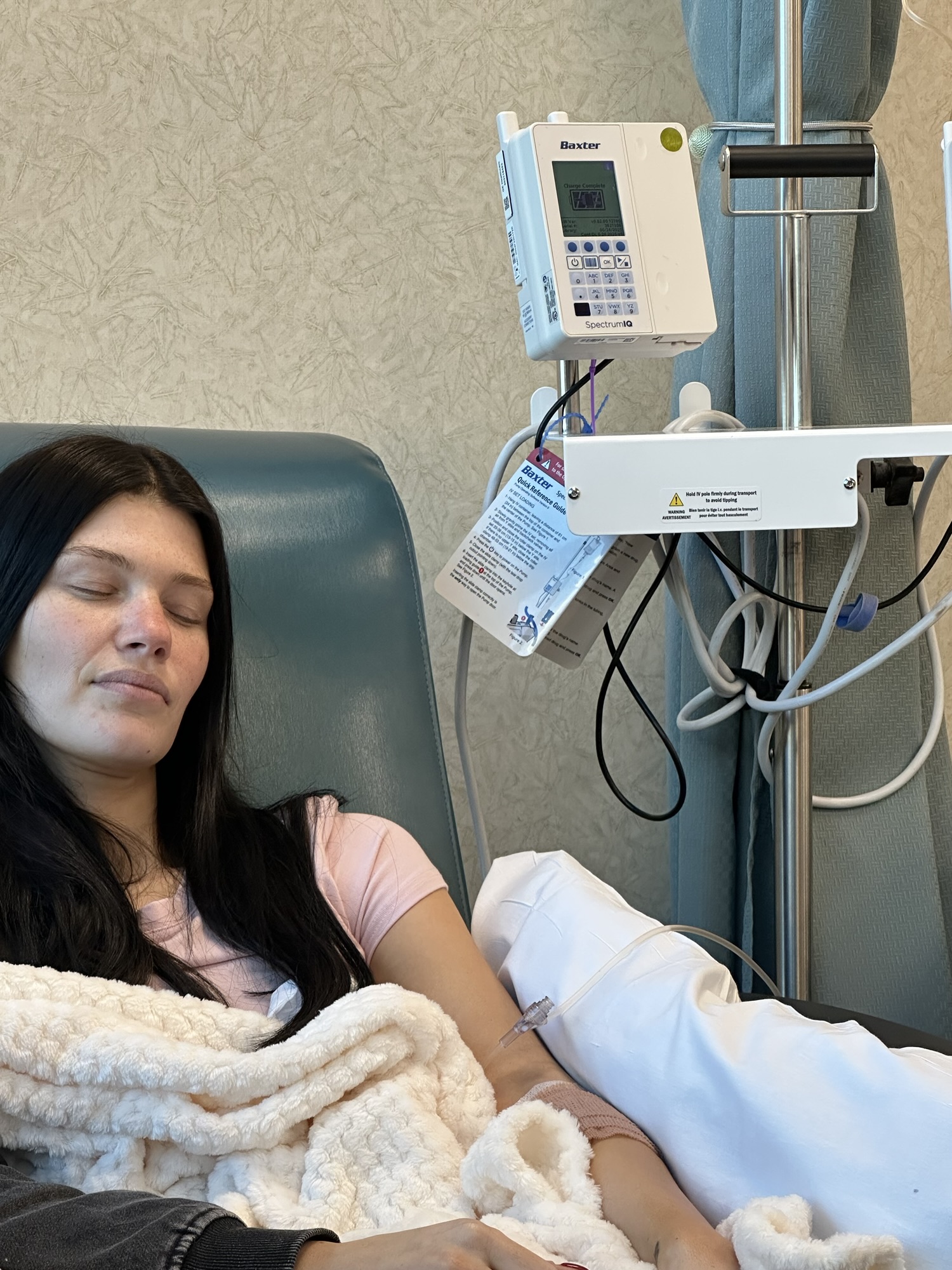
I’ve never been an open person. Most of my life, I kept my thoughts, fears, and experiences tucked tightly inside, partly to protect myself, partly to protect others, and partly because vulnerability never felt like a safe place. Chronic illness has a way of shaping the silence. When so much of your life is unpredictable, painful, or misunderstood, it feels easier to hide the messy parts, the complicated emotions, the things that don’t fit neatly into everyday conversation.
Starting The Chronic Diaries has changed something in me. If I’m going to share my story, then I want to share it fully. I want to create a space that’s honest and real for myself even if no one reads it. The outcome I hope to have is for anyone else who might need to hear that their existence isn’t “too much,” their feelings aren’t wrong, and their story deserves a voice. You don’t even have to relate to me and being sick, but you relate to the silent struggle. So today, I want to open up about a few of the hardest aspects of chronic illness: the ones I rarely say out loud, but feel deeply every day. I hope, if anything, you see a glimpse into a small piece of my heart and mind and can relate in some way, illness or not.
The Fear of Being or Sharing “Too Much”
One of the quietest, heaviest fears I carry is the fear of being “too much” for people. Too complicated, too sick, too much baggage. Chronic illness adds layers to your life that most people don’t realize. With every new diagnosis, flare, or setback, I wonder if I’m becoming harder to love, harder to support, harder to understand. It’s a fear no one really talks about, but I am sure it’s constantly there for a lot of us. As my list of diagnoses keeps growing, it becomes harder for me to understand what’s happening in my own body, let alone communicate it to someone else. It’s so much easier to ignore it and avoid the conversation entirely.
I always have an internal debate when meeting or talking with others:
Will sharing this overwhelm someone?
Am I trauma-dumping?
Will people think I’m negative?
Will I drive people away?
Am I too damaged for someone?
So you stay quiet, even when you’re scared or suffering, because you don’t want to be “too much” or “too heavy.” Silence can be lonely and sometimes you just need someone to hold space for all of it.
I do know the right people won’t run. They’ll choose me even on the hard days. Even on the days I am too tired to choose them back.
The Weight of Decision-Making Fatigue
Choosing treatments that’s best, scheduling surgeries, managing medications, navigating insurance, balancing risks…it’s a never-ending series of decisions with nothing promised or answers guaranteed. You’re forced to make choices that feel huge and terrifying, often with incomplete information. It’s exhausting and it’s a kind of burnout that most people may never understand.
Losing Parts of Yourself You Loved
This is a tough one. Illness takes more than just energy, it takes pieces of your identity. I miss the version of myself who was more social, spontaneous, fun, carefree, healthy. I used to love being active. I played sports, tried new things without hesitation, went on spontaneous adventures, stayed out late, actually slept through the night, and lived with a kind of freedom we typically don’t even realize we had. Those things felt effortless.
Now, the smallest amount of exercise can wipe me out. I have to plan days ahead for almost everything. Meals, symptoms, flares, medications, energy levels, transportation, timing, pain. Everything requires an evaluation.
Will this hurt me tomorrow? Will it trigger something? Can my body handle it? How many medications need refills before I leave? Does that activity require walking a lot? Is the temperature too hot outside for me to go? How do I explain to someone why I can’t go through the metal detector like everyone else without sharing too much? Do I look so put together that people don’t believe me? Does that job have flexibility and how much do I share at work?
I am so tired of asking these questions to myself. The grief of losing a version of yourself you loved or having to let me go is its own kind of punishment. I want to be spontaneous, fun, adventurous, fearless, confident.
Lifelong Medical Trauma
Being dismissed. Being misdiagnosed. Being told you’re exaggerating. Fighting to be believed. Walking into appointments preparing for a battle.
Medical trauma is real and it follows you. It’s baffling how common it is to be medically gaslit by someone whose entire job is to listen, diagnose, advocate, and treat, but it happens far too often. It’s difficult to trust any doctor or medical professional when this type of trauma occurs. I’ve experienced it at many stages of my health journey and today, I am lucky I am able to advocate for myself and understand how unkind and ignorant some can be. It’s the children, the uninformed parent, or the older generations that are most likely to be taken advantage of. You’d think in this line of work that empathy would be natural, but it isn’t.
Feeling Out of Place Among People Your Age
This one hurts more than I admit. Everyone around me seems to be building careers, dating freely, having kids, traveling, achieving new things. It makes me feel disconnected, like I’m watching life happen from the outside. I am living on a very different timeline, and while I know it’s not important in the scheme of things, the world we live in tells us otherwise. There is a career clock, a buying a house clock, a very real biological clock, and all of these are measured as successful when you beat it. It’s tough not knowing if, or when, I’ll get there.
This is a very real problem that I am working on in therapy. Whenever something good happens, like a moment of excitement, a physical and mental equilibrium, my first instinct is to brace for the next setback. That’s been the pattern for so much of my life that expecting the worst has started to feel like a form of protection. I’m trying to unlearn that. I’m trying to let myself enjoy things without immediately preparing for everything to fall apart. Even though I’m proud of my strength and the person I’ve become through all of this, it’s still hard not to wonder what my life would look like without all of this.
Living a Double Life
There’s the version of me the world sees: the one who smiles, posts photos, goes to work, makes it through the day, socializes, travels. Then there’s the version that exists behind closed doors: exhausted, overwhelmed, struggling to hold it all together. I am ridiculously good at hiding things.
Chronic illness creates this strange identity crisis. Most people never see the real cost of the good moments because they happen only after hours of recovery, pain, pushing through symptoms, or simply having a better day than yesterday. Don’t I get to have good days, too?
A Final Thought
Sharing my complex thoughts doesn’t mean my life is only ever this way. I still laugh. I still enjoy moments with people I love. I still find pockets of bliss, even when my body is fighting me. I will never not embrace these moments or the good days.
I’ve found these conversations are easier for me to express through writing. It feels safer, calmer, and more honest than trying to say them out loud.
I need to remind myself that these realities don’t erase the good in my life or define every piece of who I am. They’re just simply the parts you don’t always see and I promised myself I’d be honest and real if I was going to start this “public diary”.
Maybe one day I can be more vulnerable in the presence of others, but for now, I am healing my younger self and after decades of keeping it pushed down, I feel myself breathing again.
Thanks for reading.
Comments
One response to “The Hard Truths: Hidden Realities of My Chronic Illness”
Absolutely raw and beautiful at the same time. Learning to face the limitations while reminding yourself that there is joy, will be the bravest parts of your journey. Keep expressing, and feeling and loving – a gift for us all.