My junior year of high school, I had a tryout for a club volleyball team. I was excited and nervous, as it was a high-level, traveling team that could open more doors in volleyball for me. Unfortunately, I injured my ankle coming down from a hit. That moment and the sound of it popping still plays in my head. I tore two ligaments and had two fractures. Surgery was my only option to repair the damage, and while it was fixed and I was on the road to recovery, my body had other plans. Anyone with CRPS knows that any form of trauma, from something as simple as a bruise to a complicated surgery, can intensify symptoms and likelihood of it spreading. Healing always takes longer than the average person, and every day felt like I was waiting to exhale, wondering if my body could recover and carry on or if it will take me on another journey I didn’t want to go on. At this time in my life, I was heading towards my senior year, so excited to be a leader on the team, but reality hit hard. My CRPS spread beyond my left foot and ankle, consuming both legs from my thighs down. This was devastating. I had to make the heartbreaking decision to quit volleyball, a choice that I didn’t feel like was my choice at all.
By that point, I was getting close to “aging out” of Children’s, but we decided to try another pain holiday after other interventions failed to make a difference. Sadly, my pain doctor who diagnosed me, believed me, and treated me had left the pain clinic. I was devastated and his replacement was the opposite of who he was. She was cold, unkind, snappy, and completely detached. I still don’t understand how someone so emotionless could lead a pediatric pain department. After several failed attempts of treatment, which included hospital stays during Christmas and New Years Eve, she ultimately acknowledged that there was nothing else she or Children’s could do for me. My CRPS symptoms were too difficult and too far spread for my brain and body to respond to their treatments. Her recommendation for me was to meet with a neurosurgeon and begin to consider neuromodulation, something that, at the time, was presented as my last option for treatment. I was 17, getting close to graduating high school, and terrified. The idea of having a device implanted in my spine was too much to process, so I turned it down immediately and started searching for other answers.
Over the next 2 years, my family and I refused to give up. I went back to school to try to live as normally as I could. We continued to research, meet new doctors, explore every possible treatment, and I began looking for others like me and their families. I didn’t want to stop fighting, but deep down, I was so scared that nothing would ever truly work, that I would be trapped in this broken body forever. During that time, I underwent more than 50 nerve blocks, and probably more if I’m honest. I tried 2 ketamine infusions, which at that time were considered groundbreaking and experimental and no one truly understood how it would work yet. Both times, I hallucinated severely and struggled to come out of it.
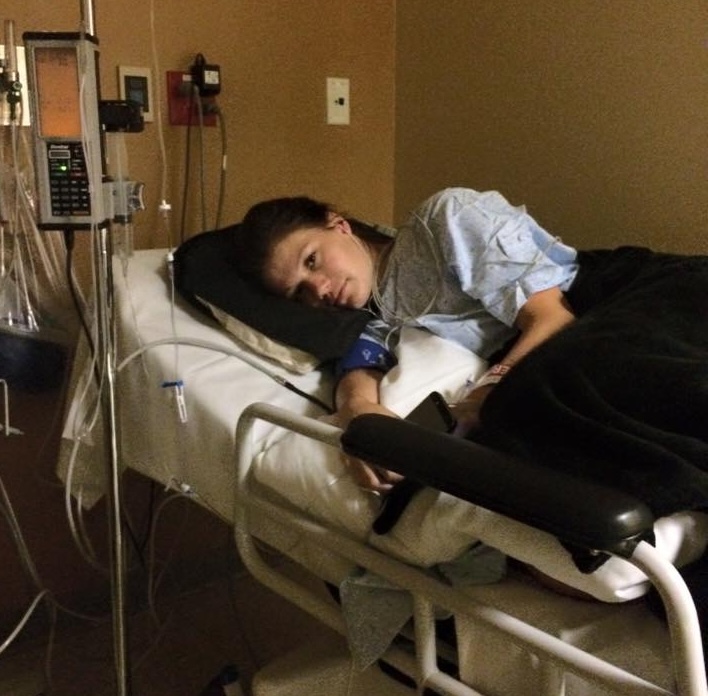
I began to rely on tools that could manage symptoms or give me a little break from the pain. I had 2 tens units, lidocaine patches, ketamine and other compound creams, cannabis products, heating pads, 3600 mg of Gabapentin (the highest dose), and a handful of other medications. I do have to say that I am very proud of how strong I was, as I never gave in to narcotics. Often, CRPS sufferers cannot function without pain medications due to the severity of their pain. For some, it was their only choice, as all other treatments failed and they were starting to lose the battle. CRPS is known as the “suicide disease” due to the extreme and merciless pain that we experience. Feelings of hopelessness and anguish often lead to suicide ideation. CRPS is almost always associated with depression, anxiety, and PTSD. The relentless pain and lack of effective management make it extremely difficult to cope. The most recent rates of suicide ideation and attempts according to the NIH were 49.3% of CRPS patients consider suicide, with 20% of them attempting suicide. These rates are way too high, but at the same time, how does anyone survive one of the most painful conditions known to us when they are told nothing can help? It is considered the most painful condition on the McGill Pain Scale (42 out of 50), above amputation, unprepared and prepared childbirth, arthritis, non-terminal cancer, and fibromyalgia. This is the reality of living with CRPS and just how consuming this illness can be, even when its undetectable to the outside world.
As time went on, these tools to manage my symptoms began to lose their effect and the pain grew harder to cope with. I found myself spending more time in bed, less time enjoying school, and had to withdraw from the second semester of my freshman year of university. I was watching the world move on without me.
I found myself at a crossroads. Do I keep pushing through life as I was, barely functioning, trapped in a body that no longer felt like mine? Do I unenroll from school, crawl into a hole, and give up? I really wanted to; I was tired and beaten. Or do I finally face the thing that scared me the most?
In 2010, I met the person who would change everything: Dr. Barolat, the greatest neurosurgeon in the world, and without question, the one who gave my life back to me. He explained the process of a spine stimulator, how it always begins with a temporary week-long trial, psychological evaluations (you can’t be too optimistic, so it doesn’t destroy you if it doesn’t work, but you must be optimistic enough to encourage positive results), and countless tests before the actual permanent placement. What stood out the most for me wasn’t the technical explanation, it was how he made me feel.
For the first time, I felt completely at peace in a doctor’s office. He saw me. He saw my suffering. My family’s exhaustion, our doubts, our fears. He didn’t rush me or talk over me, he listened. I’ll never forget his words:
“I know this pain is impossible to live with, and no one, especially at your age, should ever have to experience this. But I always want to know, how do you really feel?”
I can still hear his voice and see the empathy in his eyes. Here was a surgeon who operated on patients in their darkest moments, yet he cared just as deeply about my heart and mind as he did about my pain. That day, I knew he was meant to be part of my story.
Thanks for reading.
Comments
One response to “My CRPS Journey Part 3”
It is heartbreaking to know what you went through/are going through. God Bless Always 🙏